Pro athletes are a mainstay at high-stakes poker events. Walk into any card room during a big tournament and you’ll see Super Bowl champions, MLB All-Stars, and even active MMA fighters who are between fight camps. And they generally perform pretty well. But why do professional athletes make good pro poker players?
It’s tempting to simply say that many of them have money to burn, and so can easily take a shot at a tough table. There’s a set of skills that they share, however, that helps them perform in nearly any competitive endeavor.
+The mental toolkit that helped them find success on the field translates well to the poker table. This toolkit includes discipline, emotional control under pressure, split-second decision-making, a calculated relationship with risk, and a sometimes-demonic will to win and dominate their opponents.
Discipline Doesn’t Retire
Elite athletes spend years building routines that are centered on constant meticulous preparation, film study, and repetition. It doesn’t matter what day it is, or what is going on in their lives. They have to prepare in a dedicated way or they will not win.
It’s that simple.
One of Tom Brady’s biggest factors that brought him success was that he out-prepared other football players in the film room. He knew everyone’s tendencies down to the smallest details, and that helped him carve up NFL defenses for two decades.
That discipline doesn’t just evaporate the day a career ends.
For many, poker is a rich environment to engage their minds and continue to compete in an activity that rewards constant preparation, practice, and development.
From Field to Felt: Richard Seymour’s Rise to Poker Pro
Richard Seymour, the three-time Super Bowl champion with the New England Patriots and Pro Football Hall of Famer, has become one of the most respected recreational poker players on the tournament circuit. Over the years since his retirement from the NFL in 2012, he has racked up more than $1.4M in career earnings.
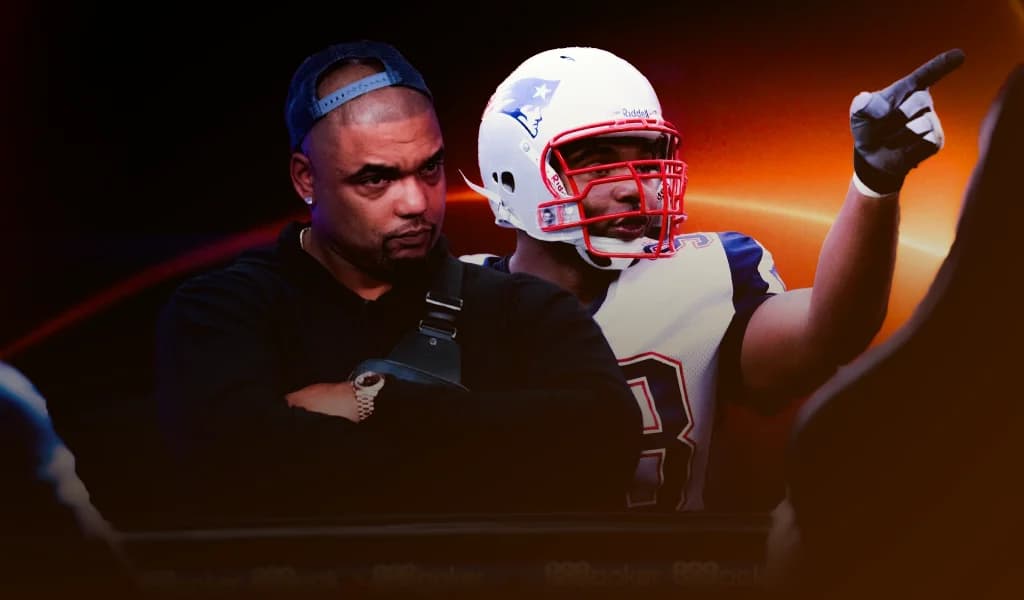
Seymour has been candid about why he’s been able to be so successful on the felt. Speaking to ESPN, he said that poker “pulls so much from you and has direct parallels to football.” Just like NFL athletes, pro poker players need to “be thoroughly prepared every day and be able to adjust quickly.” The same preparation habits that made Seymour one of the league’s most feared defenders also serve him quite well in the casino.
It isn’t necessarily about studying opponents’ tendencies, though. Instead, it’s about knowing starting standards, going deep to analyze particular spots from the last poker session, and understanding what solvers say about mid and late-hand decisions.
A solid player may know to pressure from late position light, but a next-level player who prepares regularly will know to mix in unexpected 3-bets when the BB plays back at them (and will have a line in mind for a number of possible flops and turns). This is often what separates middling players from those who are consistently getting the better of the game, no matter what situation they’re in.
Mental Control and Staying Off Tilt
This might sound counter-intuitive for athletes known for fiery intensity, but pros know how to keep themselves under control even when the pressure is on and they’ve just suffered a setback or made a mistake. Many professional athletes understand how to move on to the next play and reset so that they can play their best.
Of course, they can get rattled, spooked, or shook – they’re only human. But many of the best have worked long and hard to prepare mentally to get through the lowest moments in a game. That way, they can battle back and give themselves a chance to win no matter how bleak things look.
In short, a mentally strong player can lose a massive pot and not let it wreck the next fifty decisions.
How Terrence Chan Shakes Off Bad Beats
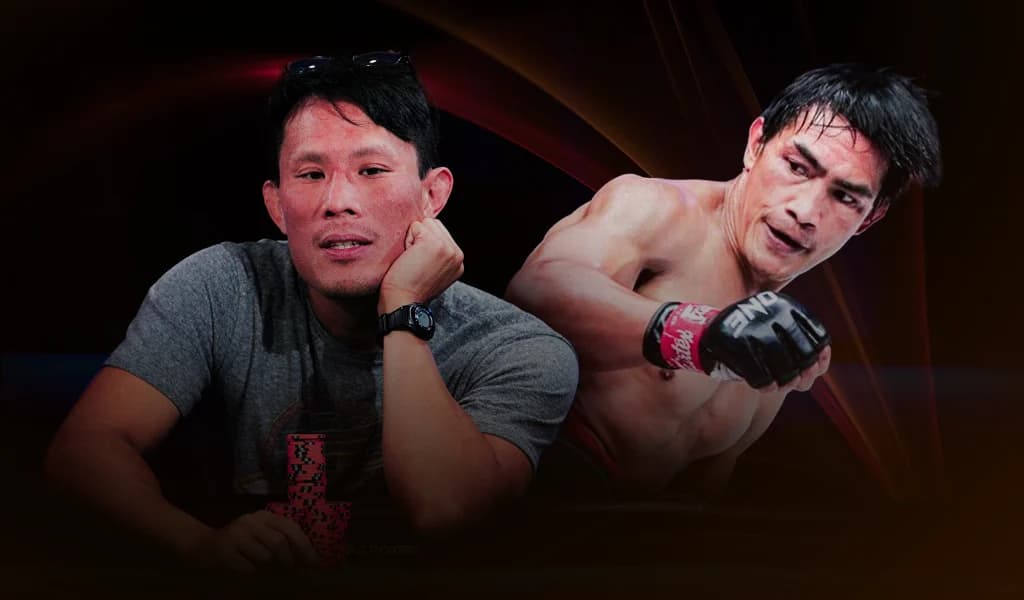
Terrence Chan is a good case study here. He’s a professional poker player with WCOOP and SCOOP titles who also has fought professionally in MMA. Chan has talked about how the two disciplines reinforce the same mental habit of moving on quickly from setbacks.
As he put it in an interview with CardPlayer, the healthiest mindset after a bad beat is simply, “I played well, the cards didn’t break my way, on to the next one.” In MMA, a fighter will need to be able to shake off a bad round or a lost exchange and immediately refocus.
The consequences for going on tilt can be getting knocked out or quickly submitted after losing focus. There’s no room for that. Compared to that situation, poker can be downright relaxing. Had a bad hand or miscalculated? So what? Be lethal in the next hand and play smart.
Richard Seymour echoed the same idea from a football perspective, describing the need to avoid tilt in pretty much identical terms. A pro poker player must treat every hand as its own event emotionally, like downs in football, rather than letting a bad beat compromise the next decision. That’s some of the best poker player advice you can get.
Decision-Making Under Pressure
Every competitive athlete constantly has to deal with the problem of a shrinking decision window. A quarterback reading a blitz, a snowboarder committing to a drop mid-air, and a fighter spotting an opening a half-second before it closes all have to make decisions in real time at the speed of elite competition.
Few people on the couch understand what this is like. No matter how much training you have, you’re not going to do the perfectly optimal thing in every single moment. Champions will get it right the vast majority of the time, but there’s room for error, and human judgment is imperfect. Does my receiver have enough separation for me to make this throw? Do I have enough speed to send a double back off this jump?
Once an athlete has skill in making those determinations, they’ve got a great ability to handle the big calls in poker. Should I call this all-in? Is this a good spot for a bluff this close to the bubble? It’s quite similar and so athletes are ready to be decisive with real money on the line in tough spots.
Risk-Taking with Serious Consequences on the Line
Not every athlete who’s found poker success came from a stadium, of course. Adventure sports athletes also have a very close relationship with risk that helps them play strong poker.
Snowboarder Ingemar Backman
Swedish snowboarder Ingemar Backman is a good example. Before injuries pushed him away from competitive snowboarding, Backman set a world record for highest air out of a quarter-pipe and competed at the 1998 Winter Olympics. Obviously, his career was built around taking calculated physical risks.
When he transitioned to poker in the mid-2000s, he found immediate success, finishing fifth out of 406 entrants at the 2005 European Poker Tour Main Event in Baden, Austria. He then embarked on a full-time tournament career that lasted roughly a decade.
The same instinct that let him commit to a massive air off a quarter-pipe, knowing the consequences of a mistake, translated into a willingness to commit chips in spots where a lot of people would freeze or fold.
MLB’s Orel Hershiser
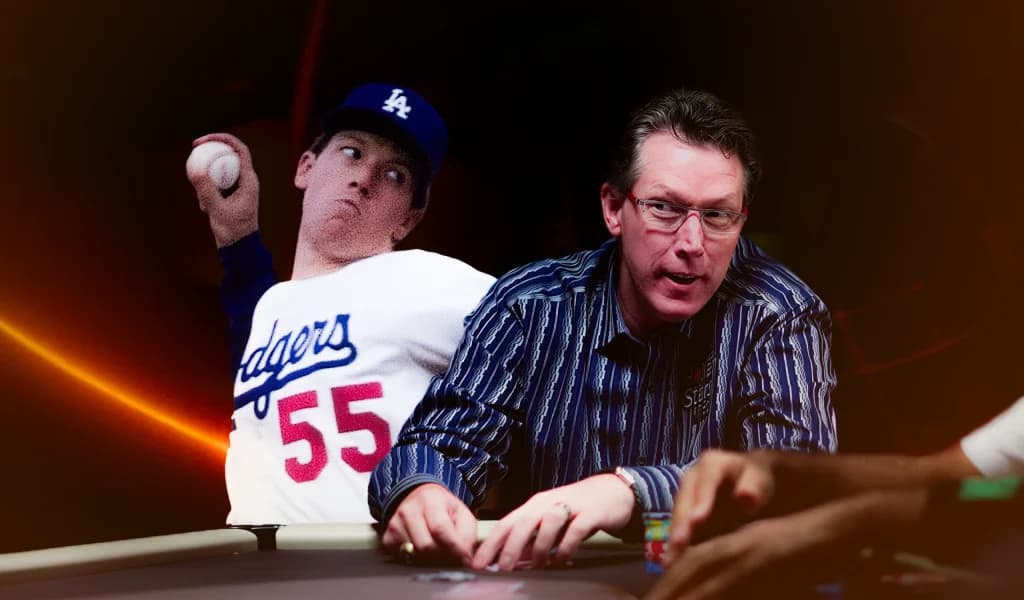
Baseball also has produced a crossover star in famed Dodgers ace Orel Hershiser. He shocked the poker world in 2008 by finishing fifth in the NBC National Heads-Up Poker Championship, where he knocked out three professional players in a row along the way.
It’s a genuinely wild achievement to beat three pros back-to-back on national television, but for those familiar with Hershiser’s resume on the mound, it’s just another clutch performance under pressure. Where normal players are trembling, professional athletes are cool, calm, and collected.
Being rich helps, too. The financial consequences have to hit different when you’re already a multi-millionaire, versus a hopeful grinder trying desperately to make enough to move up stakes and show that you can hang with the big dogs.
The Crossover Will Keep Happening
None of the skill overlap means that athletic success guarantees poker success. Plenty of professional athletes have sat down at high-stakes tables and gotten cleaned out rapidly.
But the intelligent and tactical athletes who do transition well tend to share a specific profile: 1) they’re studious, with a desire to always keep improving, and 2) they’re very comfortable in the clutch.
Those are the qualities that poker demands, and they’re well rewarded when brought together with other key skills (people reading, math skills, and sheer nerve). This is true whether you’re a former NFL lineman studying final table opponent tendencies the way you once studied game film, an MMA fighter treating a bad beat with the same detachment as a bad round in the cage, or a retired snowboarder getting ready to make yet another leap of faith into thin air.
The game changes, but the winning mindset stays the same.