There’s one thing in poker that can radically change how you play a hand, or whether you even play two cards at all: table position. Pocket 9s may look interesting in later position, but when you’re first to act (aka “under the gun” or “UTG”), it’s not so appetizing.
Where you sit in a hand dictates so many factors for how a hand will play out. Often, it matters a lot more than the cards themselves.
The key reason is that table position controls the flow of information in a hand. And in poker, information is massively important. That’s why understanding position, and learning how to compensate when you’re stuck in a weak seat, is one of the fastest ways to improve as a poker player.
A Quick 101 on Position
In flop games like Texas Hold’em, the dealer button rotates clockwise each hand, and action moves in that same direction. Being “in position” means you act after opponents. That is, you get to see what they do before deciding what to do yourself. Being “out of position” means the opposite: you have to go first, and commit to a bet, check, or fold before others at the table reveal any info.
Playing from early table position (UTG and the seats right after it) puts you at a disadvantage. Playing from late position means you get to see if others will bet or check before you have to decide what to do. If they check to you, for example, you can bet and put some pressure on them to either a) fold their weak hand or b) play it out of position when you are showing some strength.
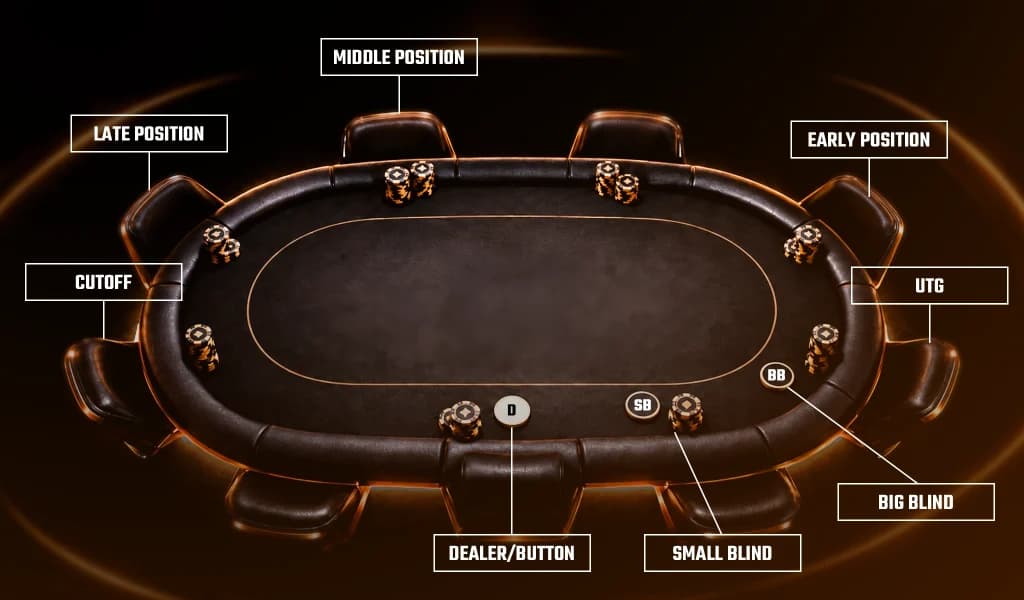
Breaking Down Each Seat
Early Position
This is the toughest spot at the table. You’re the first to act post-flop for the entire hand, and preflop you have no read on how many players will enter the pot behind you. The standard adjustment is simple: tighten your range. The best hands, like big pairs, strong broadways, and suited connectors in the right games, will play well here.
Speculative hands that need to see cheap flops and outplay opponents post-flop are not going to be very valuable. You should be doing a lot of folding here, especially if the table is active. If you put in chips, you’re likely contributing to someone else’s pot, and that’s a leak.
Middle Position
Middle position offers a slight improvement. You have a little info about the early players, but you’re still exposed to players behind you who can raise and put you between a rock and a hard place. You can widen your range a bit here and play suited aces, medium pairs, and some suited connectors.
Just know that the late position players are still in charge of the hand until proven otherwise.
Late Position (Cutoff, Button)
These are the seats that will make you a lot of money, if you play them well. The button in particular is the most profitable position in poker because you act last on every post-flop street. You can see the entire table’s action before committing chips, which means you can steal blinds more often, control pot size, and play a much wider range profitably.
Strong players routinely open hands from the button that they’d never touch from under the gun. Really, this position lets you get away with a lot. It’s not that the cards don’t matter, but they really aren’t the biggest part of your play from late position. Punish passive players from this spot, raise people and make them sweat out of position, and take stabs at a pot when it is checked to you.
Caution: Beware of check-raise traps from early position players who are sitting on monster hands and will rely on your half-hearted aggression. They know how to play from late position, too, and they know what you might be up to. They will feign weakness and then come out of left field with a big check-raise. Be ready.
The Blinds (Small Blind, Big Blind)
The blinds are a special case in poker position strategy. If they decide to play, they will likely be out of position. The small blind in particular is the worst seat at the table. You play from behind after the flop and you start with chips already committed. The big blind gets a “discount” via the option to check, but still suffers from being out of position for the whole hand. You need strong hands to play here, but should also be willing to mix it up some of the time and raise those thieves sitting on the button.
Flip the script and put the pressure back on them a certain percentage of the time and your game will be a lot less readable.
How to Overcome Weak Table Position

You can’t avoid bad seats, but you can adjust your strategy to bleed less when you’re stuck out of position.
- Tighten your opening range. This is the simplest fix. Play fewer speculative hands, and invest in more hands that play well without having info about what others hold.
- Play hands with built-in showdown value. Hands like top pair or strong draws are easier to play out of position than hands that rely on reading opponents. When you can’t see what’s coming, hands that don’t require guessing are more valuable.
- Use continuation bets selectively, not automatically. Firing a bet every time you miss the flop is a habit that gets punished by observant opponents. It’s ok to check sometimes. In fact, variation like this is essential to keep opponents from getting a read on you. When you c-bet out of position, you’re putting in money at a disadvantage.
- Consider bet sizing as a substitute for information. Since you don’t have the luxury of waiting to see what your opponent does before revealing any info yourself, you might want to keep pots smaller. Use bet sizing to take charge of a pot before it spirals out of control.
- Don’t be afraid to check-fold. Out-of-position players who force the action too often end up bleeding chips. Sometimes the best adjustment for weak position is patience. Don’t try to do too much when the flop doesn’t favor play from your particular seat.
Why Table Position Matters More As Stakes Rise
Recreational players often underweight position because low-stakes games are looser and more forgiving. Mistakes get punished less consistently. As competition sharpens, position becomes a monster factor. It’s a big reason the biggest hands at major final tables (i.e. the kind you’ll see at WSOP Main Events every summer) so often come down to who acted last, not just who held the better cards.
Forget the Cards
Table position isn’t just a technical detail. It drives nearly every decision at the table. Before you look at your cards, look at your seat. Knowing whether you’re acting first or last should shape your range, your bet sizing, and your willingness to get involved in a pot at all. Master that, and you’ll find yourself making sharper decisions no matter what two cards you’re holding.
Ready to put positional strategy into practice? Head to the tables and start testing these adjustments hand by hand. Of course, if you want to see what happens when players ditch caution altogether, check out 5 Riskiest Poker Plays That Paid Off for a look at bold plays that worked out.