
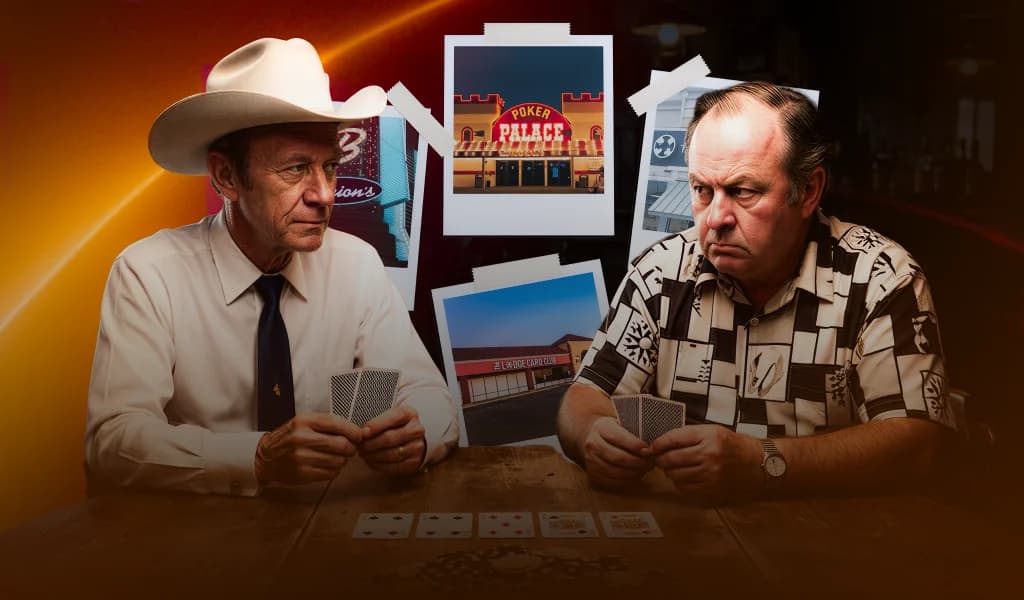
As players and fans prepare for the WSOP, it’s fun to take a look back at the card room roots of the Cadillac of Poker: Texas Hold’em.
The card rooms that shaped the game have unique stories to tell. In the first part of this series, we traced the origins of Texas Hold’em, from Robstown to Las Vegas to the world at large.
Here, we go deeper into the places where the game lived before it became famous. These are the smoky card rooms, the (sometimes shady) backrooms, the private clubs, and the modern-day poker palaces that tell the tale of Texas poker history.
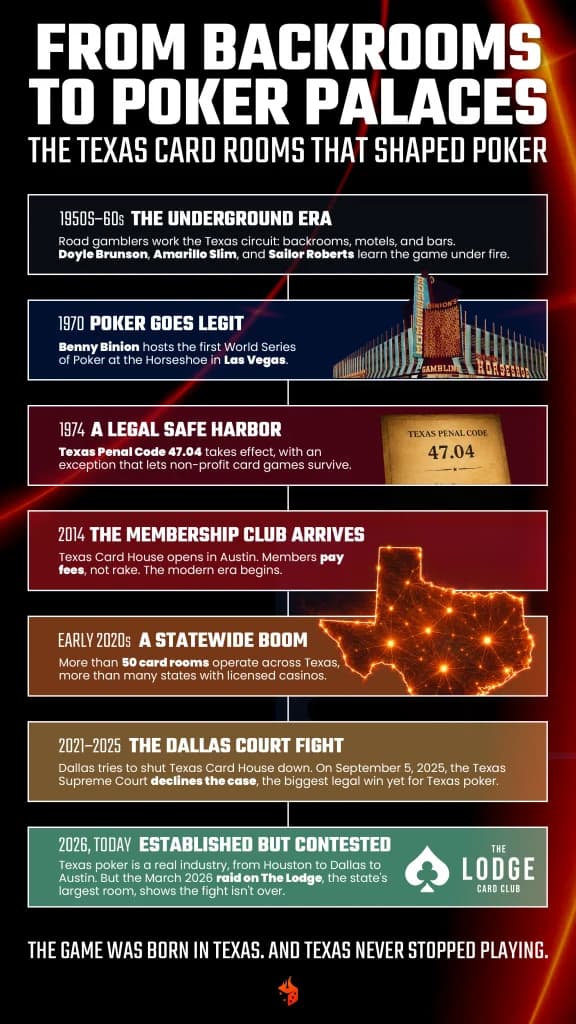
The Underground Era: Poker on the Texas Circuit
Before the World Series of Poker, before poker was televised, and before poker was played online, there was the Texas Circuit. In the 1950s and 60s, however, it was a totally underground game.
Organized gambling wasn’t legal and mainstream like it is today. This meant that any serious commercial game was always at risk of being broken up.
Doyle Brunson is one of the legendary figures of this era. He grew up in the tiny West Texas town of Longworth and began playing five-card draw while at Hardin-Simmons University in Abilene.
Brunson was a serious NBA prospect in college, but a leg injury quashed those dreams. Taking a job as a salesman in 1955, Brunson won an entire month’s salary in a backroom poker game and promptly quit his day job. Committing to poker full-time, Brunson became a road gambler travelling the Southern circuit.
These weren’t glamorous casinos. The thirty-odd stops on the circuit were backrooms in bars, motel rooms, lodge halls, and private homes. The games and players moved constantly. It was these tables that helped develop the game now known as Texas Hold’em.
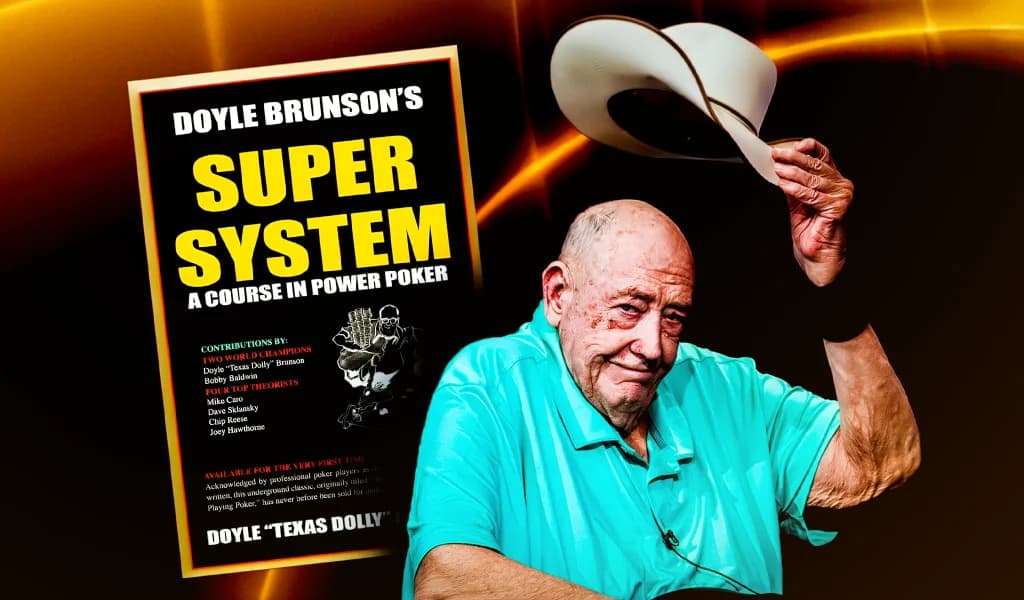
Brunson, along with fellow road gamblers Thomas “Amarillo Slim” Preston and Bryan “Sailor” Roberts, became the most famous players in the region. They traveled as a group for safety — Brunson famously said that winning at cards was the easy part.
Leaving town in one piece with their profits was the real challenge. They had to evade robbers, cheats, law enforcement, and anyone else who might be after them.
They played Hold’em, draw, and stud, developing early strategy under pressure and conditions that no casino could really replicate. By the time Brunson and his crew made it to Las Vegas in the mid-to-late 1960s, they had decades of underground Texas card room experience and were well ahead of the game.
Poker Moves Above Ground
When Texas Hold’em surfaced in Vegas casinos in the ’60s, the culture of underground Texas card rooms stayed with it. Even as hold’em became more and more common, it held on to that aura of notoriety, and slowly drew a bigger audience.
Part of the reason for that notoriety was because of a small safe harbor in the law. Texas Penal Code Section 47.04, which went into effect in 1974, prohibited “keeping a gambling place,” but Section 47.02 permits card rooms if 1) the game takes place in a private place, 2) no one receives an economic benefit other than personal winnings, and 3) all participants have an equal chance of winning.
That “private place” requirement made the membership-club model possible, and allowed an entire industry to flourish. In fact, over the next twenty years, poker rooms operating in this framework were a part of everyday life for Texas card players.
No advertising, no flashy promotions or attention – just poker for players in the know, all to avoid attracting unwanted attention. As the need for fly-by-night road gambling faded, Texas Hold’em grew in popularity.
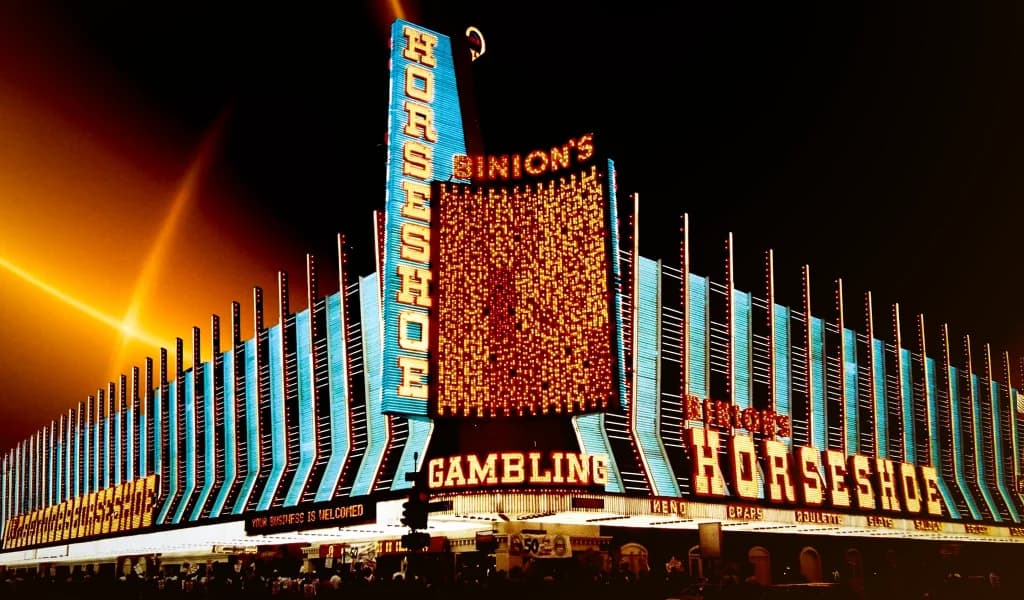
Meanwhile, the first WSOP was organized at Binion’s Horseshoe Casino in Vegas in 1970, building off the popularity in Texas. After the first year of the WSOP, Texas Hold’em became the official main event due to popularity, ushering in a modern card room era.
The Modern Era: Card Clubs with Memberships
Back in Texas, things became formalized around 2014, when Texas Card House opened its first location in Austin, styled as a private membership club.
Members would pay fees instead of rake from pots. They played against each other for their own money. Card rooms provided members with access to games, but did not profit from the games themselves.
The model worked.
Other card rooms followed this example and expanded across the state. By the early 2020s, Texas offered more than 50 different card rooms — far more than many states with fully licensed brick and mortar casinos.
Gone was the smoke and low lighting. These card rooms offered professional dealers, nice seats, and even food and beverage service. Plus, regular tournaments ensured continued interest in the game.
The Lodge
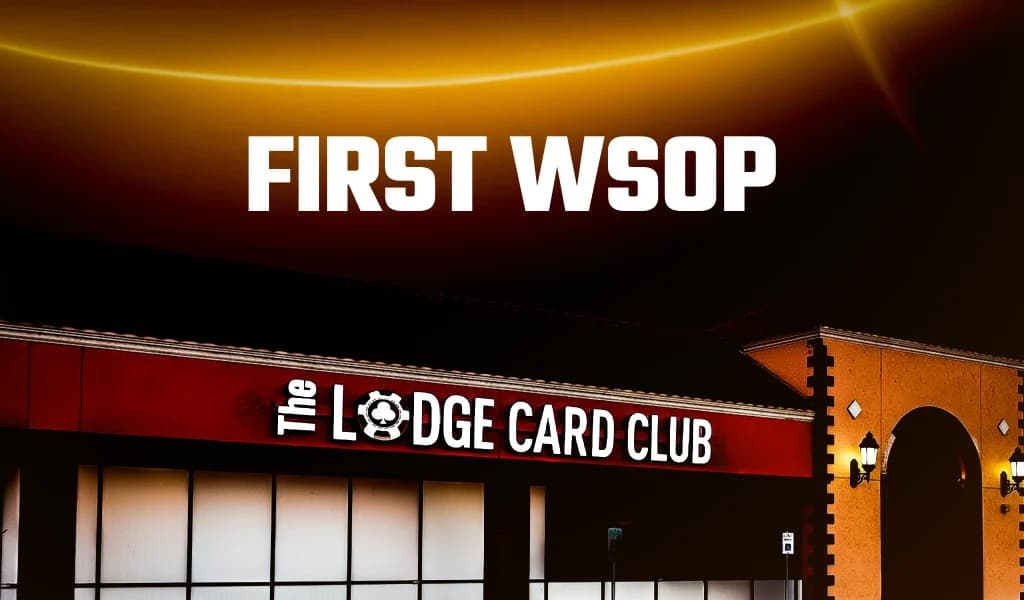
The Lodge is a card room that really has come to define modern Texas poker. Co-owned by poker pros Doug Polk, Andrew Neeme, and Brad Owen, you can find the Lodge in Round Rock, north of Austin.
The trio brought something the Texas card room world had not really experienced: a massive online following. Polk himself boasted over 160,000 Twitter followers, while Neeme and Owen had collectively built hundreds of thousands of YouTube subscribers through their poker vlogs.
Almost overnight, The Lodge became the place to be, with players driving in from across the state, and then from across the country. They wanted to sit in the same room where they’d seen the pros flipping cards and stacking chips online.
The Lodge grew to nearly 70 poker tables, becoming the largest poker club in Texas and one of the largest in the country. Its live stream, “Poker at the Lodge,” has a dedicated audience and attracts high-stakes players from all over the country. Monthly tournaments with $500,000 guaranteed prize pools have become a staple.
The Legal Scuffle
The “gray zone” that allows Texas card rooms to flourish has been tested. In fact, the City of Dallas moved in late 2021 to revoke Texas Card House’s certificate of occupancy. The city argued the rooms were operating outside the law even with the membership model.
What followed was a three-year legal fight costing the city of Dallas over half a million in legal fees. In August 2024, the Fifth District Court of Appeals ruled in TCH’s favor. Dallas appealed to the Texas Supreme Court to challenge the ruling. There was a moment of surprising solidarity that followed.
The Lodge (TCH’s primary competitor in the Austin market) filed an amicus curiae or “friend of the court” brief in support of Texas Card House during the appeal. The court ultimately declined to hear the case on September 5, 2025, effectively ending the dispute and handing the Texas poker community its biggest legal victory to date. Polk called the Supreme Court’s decision “the biggest possible win to protect our right to play poker.”
Texas Poker Today
As of 2025, Texas poker card rooms are an established industry. Dozens of card rooms operate across Houston, Dallas, Austin, San Antonio, and beyond, employing thousands of people. The rooms range from intimate 10-table clubs in smaller cities to sprawling facilities like The Lodge and Prime Social.
Some tension with authorities is still there, and skirmishes are ongoing, but because there is always interest in poker in Texas, most of the card rooms abide.
Texas Hold’em grew in card rooms like these. And anyone who sits down to play a game, online or off, can still feel that Southern gambler’s spirit any time they push their chips to the center and say, “I’m all in.”